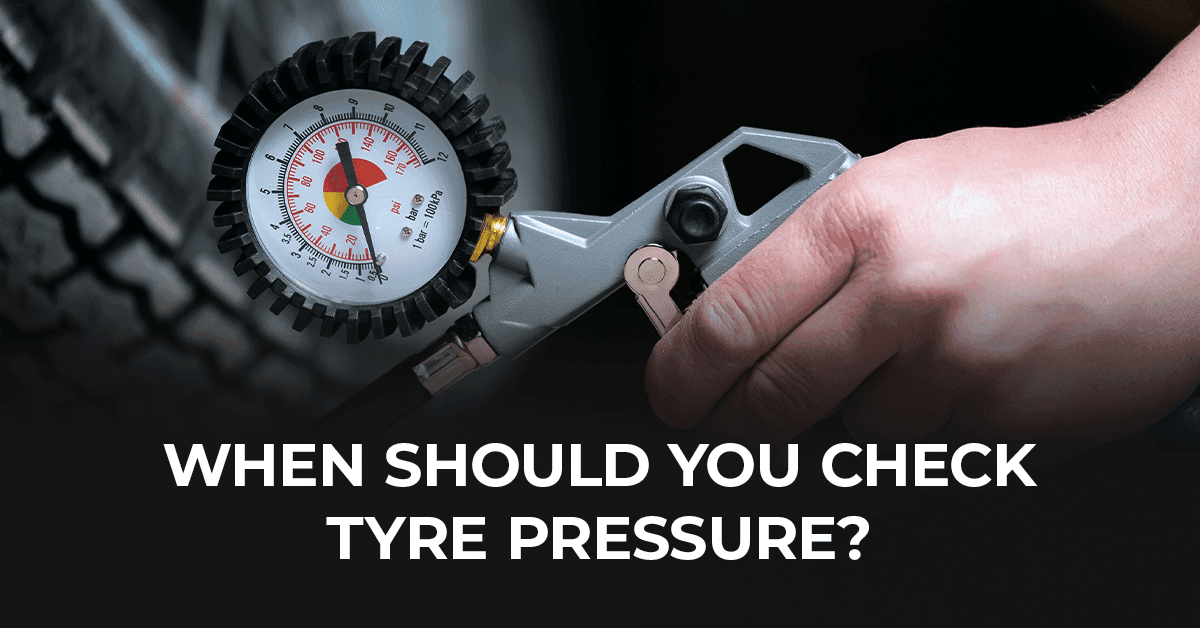
It’s important for your car’s safety and performance that your tyres are always correctly inflated.
Your car’s tyres will naturally lose some air each month, which is why you need to check tyre pressure regularly.
Page Contents
How Do I Check My Car's Tyre Pressure?
To check your car’s tyre pressure at home, follow these steps.
Find your car's recommended tyre pressure
Check your car manufacturer's recommended tyre pressure before you begin so that you know if your tyres are under- or over-inflated.
You can find the correct tyre pressure for your car in the owner’s manual for your vehicle, or on a sticker inside the driver’s door frame - sometimes you can also find this inside the fuel filler flap.
Please note that the front and rear tyres may require different pressures, depending on your manufacturer's specifications.
Tyre pressure can be measured in bars (metric) and pounds per square inch or PSI (imperial).
If you need to convert the measurements, note that 1 Bar = 14.5 PSI.
Make sure the car is parked safely on level ground
With your car parked, make sure your engine is off and the handbrake is engaged.
To avoid inaccuracies, always check tyre pressures when the tyres are cold - ideally before the car is driven or after the car has not been driven for at least 3 to 4 hours.
Remove tyre valve dust cap
Remove the valve cap from one tyre and press a quality tyre pressure gauge onto the valve stem.
Hold it in place until the hissing sound stops and the gauge gives you a reading.
Take a note of the reading and then do the same for the other remaining tyres.
Adjust Tyre Pressure if Required
If you find that your tyres are over-inflated, you can let air out of them by briefly pressing the pin inside the valve stem with a suitable tool or by applying the pressure gauge to the valve so that the hissing sound is audible.
Reseal the gauge to check the pressure again and repeat until you reach the required pressure.
If your tyres are under-inflated, you can use an air-compressor to refill them.
Press the air compressor hose onto the valve stem - or screw the hose to the valve if you have this type of air compressor - and fill until you see the required PSI on the gauge.
Certain digital air compressors are designed to cut out or beep when the desired pressure you input is reached.
Final Checks
Don’t forget to check your car’s spare tyre too, if you have one.
If your car has a Tyre Pressure Monitoring System (TPMS), you can follow your handbook instructions to reset it once you've adjusted the pressures.
When Should Tyre Pressure Be Checked?
Tyre pressure should always be checked when the tyres are cold, as warm tyres can give inaccurate pressure readings.
For your tyres to be classed as cold, the car should not have been driven for at least 3 to 4 hours.
How to Use a Tyre Pressure Machine at a Petrol Station (UK)
You can use a tyre inflation pump at a UK petrol station to check and adjust your tyre pressure.
As with checking your tyre pressure at home, make sure you note the manufacturer's recommended tyre pressure for your car before you begin - and always check the tyres when they are cold.
At most petrol stations, you will need to remove the valve dust cap from the tyre and attach the inflator hose firmly to the valve.
The tyre inflation gauge will display the internal pressure in PSI and/or bar - note that you may be required to set a target pressure first.
You may hear short a hissing sound when attaching the hose, which shouldn't significantly affect tyre pressure.
You can compare the pressure displayed on the gauge with the recommended pressure for your vehicle.
If the pressure is above the recommended level, release air to reach the right level.
If it is below the recommended level, then inflate the tyres to the recommended level.
Please note that if you use a tyre inflator at a petrol station readings can vary slightly between machines.
To ensure accuracy, it's a good idea to also check your tyre pressure using a personal pressure gauge or as part of routine servicing.
What Should My Tyre Pressure Be?
You can find the recommended tyre pressure for your car in your vehicle handbook, printed inside the fuel tank flap or in the sill of the driver’s door.
You will see two types of pressure indicated – normal pressure (which is standard pressure) and loaded pressure (for when the vehicle is carrying heavy loads and/or multiple passengers).
You should always use the pressure that matches your current driving conditions.
Please note that the recommended pressure for your front and rear tyres may be different, depending on your model.
Does My Tyre Have a Slow Puncture?
A slow puncture will release air from your tyre gradually, meaning you may not notice it until the tyre has lost pressure.
Your car may have a slow puncture if you spot any of the following warning signs:
Vibration in the steering wheel
Poor handling
A worn tyre sidewall
A clicking sound when driving
Debris piercing the tyres
Your car pulls to the side
If you suspect your car has a slow puncture or your tyres aren’t holding air, you should stop driving in case this affects your car’s handling.
You’ll need the help of a professional garage – some slow punctures can be repaired but a replacement tyre may be required.
Why Is Tyre Pressure Important?
Having the correct tyre pressure is extremely important for your car for several reasons, as both under- and over-inflated tyres can have a negative impact on your car’s safety and performance.
If you neglect to check tyre pressure regularly, this could lead to poor fuel economy, reduced handling and possibly even a tyre blowout.
If you want your tyres to last longer so that you can save money and stay safe on the road, it pays to be proactive about your car’s tyres.
Worried about the condition of your car's tyres? We've made it easier than ever to compare local tyre providers.
Whether you need winter, all-season or off-road tyres, you can find exactly what you're looking for when you browse our platform.
You can even book a puncture repair for your tyre if needed, too, so you never have to worry for long.





No comments yet
Leave a comment